WEBSITE

SLIDER

  •  photo af2e85ba-243e-40b7-8359-102dd88c7086_zps6e5119e3.jpg" />
  •  photo 99c2aa08-6fda-4dc3-94cd-6f85d497db9c_zpsdfb0c0fe.jpg" />
Showing posts with label technical challenge. Show all posts

Sunday, 12 October 2014

Cherry Cake British Bake Off Technical Challenge

Mary Berry's Cherry Cake was the first Technical Bake Challenge of the latest series 
The Great British Bake Off. I decided to bake the Technical Challenge Recipe set out each week, and to serve them at Fancy.
One of the main aims for this technical challenge was to ensure your glace cherries are evenly suspended in the sponge and not sunken to the bottom !

I am not a big fan of glace cherries, think it goes back to my childhood when my mum was baking I kept asking for a cherry, in the end she gave me the whole tub,  I was then sick from eating too many of them.  Bit like the Witches of Eastwick Cherry Scene Jack Nicholson.


I have modified Mary Berry's Cherry Cake Recipe to fit my larger Savarin mould of 10 inch diameter.

Ingredients
300g glacé cherries
340g/8oz self-raising flour
265g/6oz softened butter, plus extra for greasing
265g caster sugar
2 lemons, finely grated zest only
75g ground almonds
6 medium free-range eggs

For the decoration
175g  icing sugar
1 lemon, juice only
flaked almonds, toasted
5 glacé cherries, quartered

Preparation method
Preheat the oven to 180C/350F/Gas 4. Grease a 10 inch savarin mould with butter.

Cut the cherries into quarters place in a sieve and rinse under running water. Drain well then dry thoroughly on kitchen paper and toss in 3 tablespoons of the flour.


Measure all the remaining ingredients into a large bowl and beat well for two minutes to mix thoroughly. Lightly fold in the cherries. Turn into the prepared tin.


Bake in the preheated oven for 35-40 minutes until well risen, golden-brown and a skewer inserted into the centre comes out clean. Leave to cool in the tin for 10 minutes then turn out and cool on a wire rack.


For the icing, mix the icing sugar together with the lemon juice to a thick paste. Drizzle over the cooled cake using the back of a spoon, sprinkle over the toasted almonds and reserved cherries.


Saturday, 4 October 2014

Kouign-amann BRITISH BAKE OFF TECHNICAL CHALLENGE

Kouign-amann is a Breton cake. It is a round crusty cake, made with bread dough containing layers of butter and sugar folded in, similar in fashion to puff pastry. The resulting cake is slowly baked until the butter puffs up the dough (resulting in the layered aspect of it) and the sugar caramelizes. The name derives from the Breton words for cake ("kouign") and butter ("amann").
On episode 7 of series 5 of The Great British Bake Off the kouign-amann was featured as Paul Hollywood's technical challenge.

Here is the link to the recipe from BBC Good Food kouign a mann recipe
Equipment and preparation: for this recipe you will need a 12-cup muffin tin and a freestanding mixer fitted with a dough hook.

Ingredients
300g strong plain flour, plus extra for dusting
5g fast-action yeast
1 tsp salt
200ml warm water
25g unsalted butter, melted
250g cold unsalted butter, in a block
100g caster sugar, plus extra for sprinkling

Preparation method
Put the flour into the bowl of a freestanding mixer fitted with a dough hook. Add the yeast to one side of the bowl and the salt to the other. Add the water and melted butter and mix on a slow speed for two minutes, then on a medium speed for six minutes.

Tip the dough onto a lightly floured work surface and shape into a ball. Put into a lightly oiled bowl. Cover with cling film and leave to rise for one hour.
Sandwich the butter between two sheets of greaseproof paper and bash with a rolling pin, then roll out to a 18cm/7in square. Place in the fridge to keep chilled.


On a lightly floured surface, roll out the dough to a 20cm/8in square. 


Place the butter in the centre of the dough diagonally, so that each side of butter faces a corner of the dough. Fold the corners of the dough over the butter to enclose like an envelope.


Roll the dough into a 45x15cm/18x6in rectangle. Fold the bottom third of dough up over the middle, then fold the top third of the dough over. You will now have a sandwich of three layers of butter and three layers of dough. Wrap in cling film and place in the fridge for 30 minutes. This completes one turn.


Repeat this process twice more, so you have completed a total of three turns, chilling the dough for 30 minutes between turns.
Roll the dough into a rectangle as before. Sprinkle the dough with the caster sugar and fold into thirds again. 


Working quickly, roll the dough into a large 40x30cm/16x12in rectangle. Sprinkle the dough with caster sugar and cut the dough into 12 squares.


Grease a 12-cup muffin tin well with oil. Gather the dough squares up by their four corners and place in the muffin tins, pulling the four corners towards the centre of the muffin tin, so that it gathers up like a four-leaf clover. Sprinkle with caster sugar and leave to rise, covered with a clean tea towel, for 30 minutes until slightly puffed up.


Preheat oven to 220C/200C(fan)/425F/Gas 7. Bake the pastries for 30-40 minutes, or until golden-brown. 


Cover with foil halfway through if beginning to brown too much. Remove from the oven and leave to cool for a couple of minutes before turning out onto a wire rack. Be careful not to burn yourself on the caramelised sugar, but don’t leave them to cool for too long, or the caramelised sugar will harden and they will be stuck in the tin.


Serve warm or cold.
They were delicious everyone loved them and were very easy too.

Sunday, 14 September 2014

Prinsesstårta Great British Bake Off Technical Challenge


This Swedish Princess layer cake is pastel green and full of custard, jam, marzipan, and a mound of whipped cream!
This cake was one of the Technical challenges on the Great British Bake Off 2014, I have promised myself to try each challenge and then to sell the result in my Fancy cafe.

Adapted from Mary Berry's Recipe
Preparation method
For the vanilla custard
    600ml milk
    1 vanilla pod, split in half lengthways and seeded scraped out
    6 free-range egg yolks
    100g caster sugar
    50g cornflour
    50g unsalted butter

    For the Jam
    200g raspberries
    175g caster sugar

    For the Sponge
    5 medium free-range eggs
    5 oz caster sugar
    2½oz cornflour
    2½oz plain flour
    1 tsp baking powder
    50g butter, melted
    Filling & topping
    600ml pints double cream
    50g dark chocolate (36% cocoa solids), melted

    For the Marzipan
    400g ground almonds
    150g caster sugar
    250g icing sugar, plus extra for dusting
    2 medium free-range eggs, beaten
    1 tsp almond extract
    green food colouring paste

  1. For the vanilla custard, pour the milk into a pan with the vanilla seeds and vanilla pod and place over a low heat until just simmering. Remove from the heat.
  2. In a large bowl, whisk the egg yolks, sugar and cornflour together until pale and creamy.
  3. Remove the vanilla pod from the warm milk.
  4. Stir the warm milk slowly into the egg mixture. Pour the mixture back into the pan and cook over a low heat for 4-5 minutes, whisking, until the mixture thickens. (It should be very thick.)
  5. Remove from the heat and beat in the butter until melted and incorporated. Transfer to a bowl, cover the surface with clingfilm to prevent a skin forming and leave to cool. Set aside to chill in the fridge.
  1. For the jam tip the raspberries into a deep saucepan with the sugar and two tablespoons of water. Cook gently over a low heat, stirring occasionally, until the sugar is dissolved. Bring the mixture to the boil and boil vigorously for about four minutes, or until the temperature reaches 104C/219F on a sugar thermometer. Transfer to a heatproof bowl and leave to cool completely.

  1. For the sponge, preheat the oven to 180C/160C(fan)/Gas 4. Grease and line the base of a 23cm/9in springform tin with baking parchment.
  2. Put the eggs and sugar into a large bowl and using an electric mixer, whisk together until the mixture is very pale and thick and the whisk leaves a trail on the surface when lifted. This will take about five minutes.
  3. Sift the cornflour, flour and baking powder over the egg mixture and carefully fold in using a large metal spoon. Fold in the melted butter, taking care not to over mix.
  4. Pour the mixture into the lined tin and bake for 30-40 minutes until the sponge is golden-brown and has just started to shrink away from the sides of the tin. Remove from the oven and set aside to cool. When cool enough to handle, turn out on to a wire rack to cool completely.

To assemble the cake:
  • using a serrated knife, cut the cake horizontally into three even layers. Place one of the sponges onto a serving plate. Spread a very thin layer of custard over the base of the first sponge.
  • Spoon a quarter of the custard into a piping bag fitted with a small plain nozzle and pipe a border around the edge of the sponge – this is to contain the jam.
  • Spoon the jam over the sponge, and spread evenly within the border.


  • In a bowl, whip double cream to firm peaks. Fold half of the whipped cream into the remaining custard.
  • Spread 1/3 of the custard cream over the jam.


  • Place the second sponge on top and spread the remaining custard cream over.

  • Place the third sponge on top. Spoon over the remaining whipped cream covering the sides and smoothing into a small dome shape on the top. Set aside in the fridge for an hour.
  • For the marzipan, mix the ground almonds and sugars in a mixer fitted with a dough hook, before adding the eggs and almond extract.
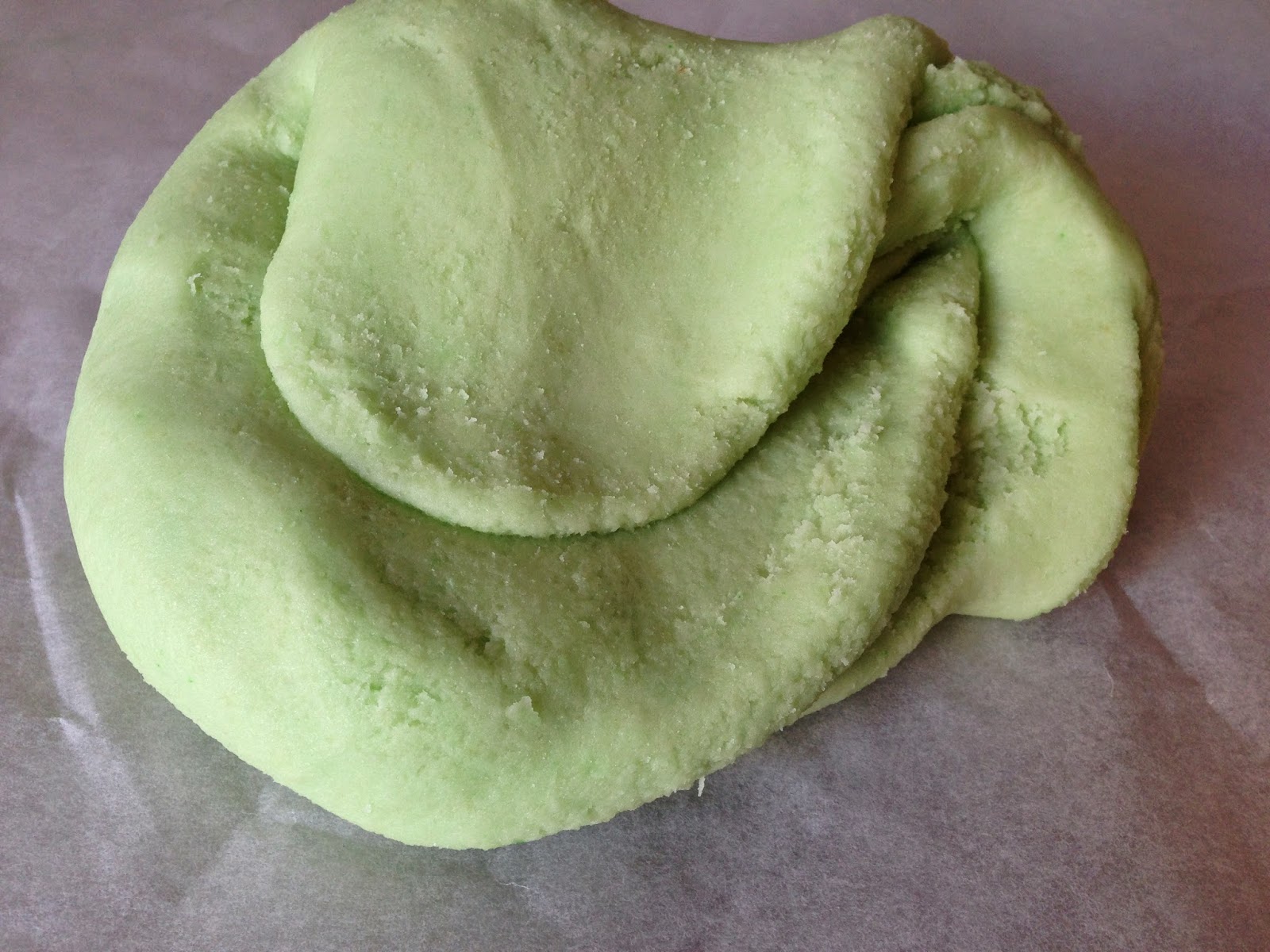
  • Knead in the bowl until it forms a stiff dough. Turn out onto a surface dusted with icing sugar. Using a cocktail stick add a tiny amount of green food colouring and knead to an even pastel green colour.
  • Roll out the marzipan on a surface lightly dusted with icing sugar, to a 40cm/16in diameter circle, large enough to cover the cake. 
  • Lift the marzipan up over the cake and using your hands, shape the marzipan around the sides of the cake to get a smooth finish. Trim any excess.

  • Spoon the melted chocolate into a small paper piping bag. Snip off the end and pipe a swirls over the top of the cake.


Saturday, 6 September 2014

Ciabatta Great British Bake Off Technical Challenge


One of the technical challenges on The Great British Bake Off 2014 set by bread baker Paul Hollywood, was Ciabatta. The challenge was to bake four Italian ciabatta bread loaves using Paul's recipe, below.

Ciabatta is something I have never baked before so was looking forward to testing 
Paul Hollywoods recipe.

500g strong white bread flour, plus extra for dusting
10g salt10g instant yeast
40ml olive oil
400 ml tepid water
Fine semolina for dusting (optional)


1. Lightly oil a 2-3 litre square plastic container.
(It’s important to use a square tub as it helps shape the dough).

2. Put the flour, salt and yeast into the bowl of a mixer fitted with a dough hook (don’t put the salt directly on top of the yeast). Add the olive oil and three-quarters of the water and begin mixing on a slow speed. As the dough starts to come together, slowly add the remaining water. Then mix for a further 5-8 minutes on a medium speed until the dough is smooth and stretchy.


3. Tip the dough into the prepared tub, cover with a tea towel and leave until at least doubled, even trebled in size – 1-2 hours or longer.


My tub was too shallow, or my dough was growing fast. My dough started off where the pen mark is on the tub, so it has more than trebled in size.

4. Heat your oven to 220°C and line 2 baking trays with baking parchment or silicone paper.

5. Dust your work surface heavily with flour – add some semolina too, if you have some. Carefully tip out the dough (it will be very wet) onto the work surface, trying to retain a rough square shape. 


Rather than knocking it back, handle it gently so you can keep as much air in the dough as possible. Coat the top of the dough with more flour and/or semolina. Cut the dough in half lengthways and divide each half lengthways into 2 strips. You should now have 4 pieces of dough. Stretch each piece of dough lengthways a little and place on prepared baking trays.


6. Leave the ciabatta dough to rest for a further 10 minutes, then bake for 25 minutes, or until the loaves are golden brown and sound hollow when tapped on the base. Cool on a wire rack.

Here they are my finished loaves !


Tiramisu Cake Great British Bake Off Technical Challenge


Another technical challenge from the British Bake Off 2014


Adapted from Mary Berry Recipe


Ingredients

 sponge
For the filling
For the decoration

method

  1. Preheat the oven to 175 C
    Grease a 38x25cm Swiss roll tin and line with baking parchment.
  2. For the sponge, place the eggs and sugar in a large bowl and, using an electric hand-held mixer, whisk together for about five minutes, or until the mixture is very pale and thick. The mixture should leave a light trail on the surface when the whisk is lifted.
  3. Sift over the flour and fold in gently using a metal spoon or spatula, taking care not to over mix.

  4. Pour the mixture into the prepared cake tin and tilt the tin to level the surface.


  5. Bake for 20 minutes, or until risen, golden-brown and springy to the touch. Cool in the tin for five minutes then turn out onto a wire rack and leave to cool completely.

  6. For the filling mix espresso & brandy. Set aside to cool.
  7. When the sponge is cold, carefully slice the cake in half horizontally, so you have two thin sponges of equal depth.
  8. Using the loose base of a square cake tin as a guide, 7inch squares from each sponge.


  9. Line the base and sides of the square tin with long rectangles of baking parchment; there should be plenty of excess parchment which you can use to help lift the cake from the tin later.


  10. Place the mascarpone cheese in a large bowl and beat until smooth. Gradually beat in the cream and icing sugar to make a creamy, spreadable frosting.
  11. Place one layer of sponge in the base of the lined cake tin. Spoon over one-quarter of the coffee brandy mixture. Then spread one-quarter of the mascarpone frosting over the soaked sponge. Scatter over one-third of the grated chocolate.


  12. Place the second sponge on top, spoon over another quarter of the coffee mixture then spread another quarter of the frosting over the soaked sponge. Scatter over another one third of the grated chocolate. Repeat with the third sponge and another one-quarter of the coffee mixture and frosting and the remaining grated chocolate.
  13. Place the fourth sponge on top and spoon over the remaining coffee mixture. Using a palette knife spread a very thin layer of the remaining frosting over the top of the cake.


  14. Chill for at least one hour in the fridge before turning out.
  15. While the cake is chilling, melt half of the chopped chocolate in a small bowl set over a pan of gently simmering water. (Do not let the bottom of the bowl touch the water.) Gently stir the chocolate until it reaches a melting temperature of 53C.

  16. Remove the bowl from the heat and add the remaining half of chopped chocolate and continuing stirring gently until the chocolate cools to 31C or lower and is thick enough to pipe.
  17. Place a sheet of baking parchment on the work surface. Use another sheet to make a paper piping bag.
  18. Spoon the melted chocolate into the paper piping bag. Snip off the end and pipe decorative shapes onto the baking parchment. Leave to set until required.


Hover to Pin

 
Designed with ♥ by Nudge Media Design